GNSS

Global Navigation Satellite Systems

浏览更多

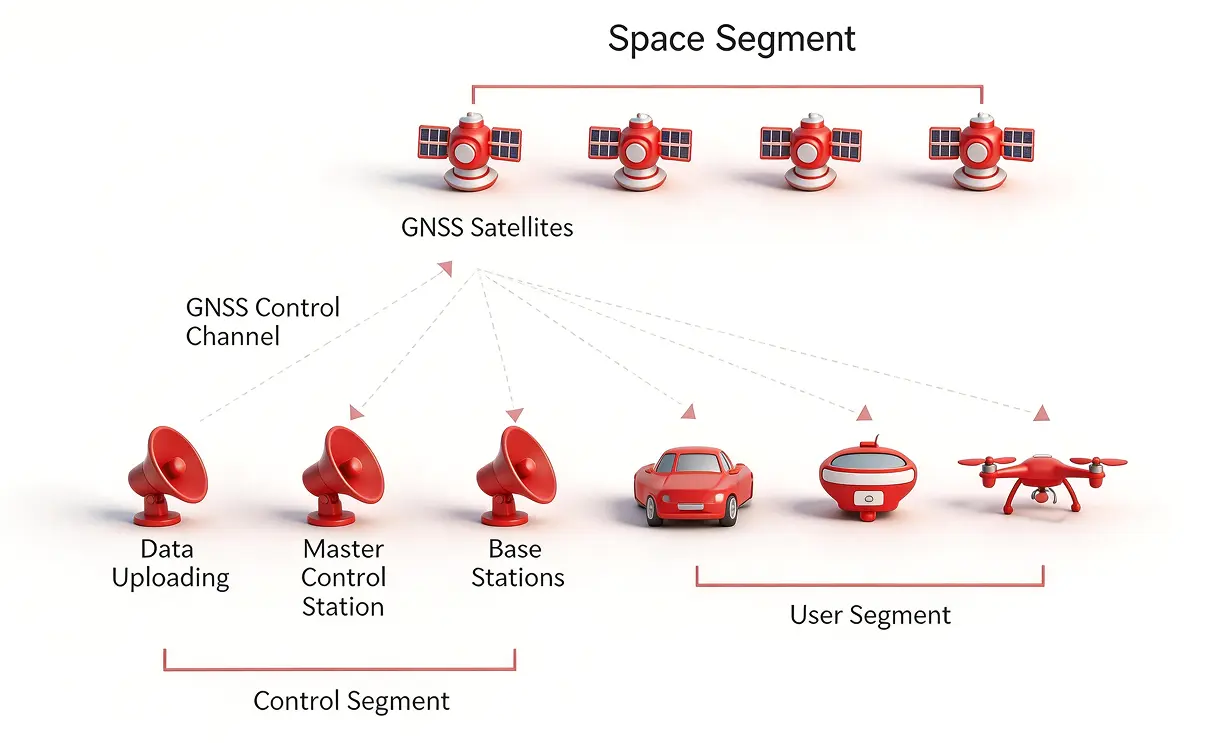
GNSS Segments

  • Space Segment
  • Control Segment
  • User Segment

Space Segment

United States

GPS

Global Positioning System

27

Russia

GLONASS

Globalnaya navigatsionnaya sputnikovaya sistema

24

European Union

Galileo

Europe's own global navigation satellite system

27

China

BeiDou

BeiDou Navigation Satellite System

35

Japan

QZSS

QZSS Navigation Satellite System

3

India

IRNSS

Indian Regional Navigation Satellite System

7
Control Segment

Source:GPS.GOV

Master Control Station

Alternate Master Control Station

Ground Antenna

AFSCN Remote Tracking Station

NGA Monitor Station

Air Force Monitor Statiol

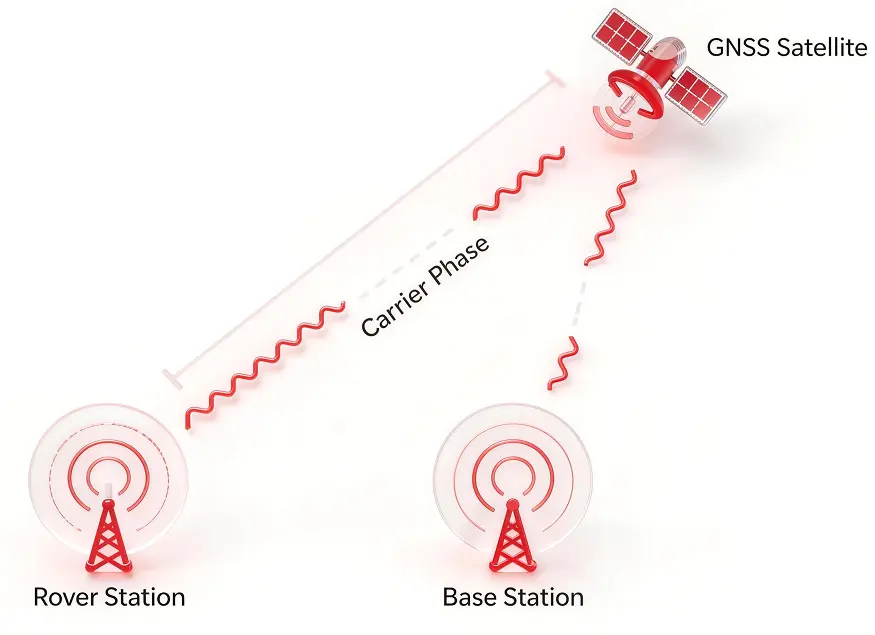
Satellite-based positioning relies on measuring the distances between satellites and receivers. With known satellite positions and measured distances between satellites and a receiver, the receiver's coordinates can be calculated. However, the electromagnetic signals emitted by satellites are disrupted by atmospheric and clock errors, which degrade GNSS positioning accuracy.

Imagine being born to survey with internal centimeter-positioning accuracy.

Imagine being born to map and analyze with internal centimeter-positioning accuracy.

Imagine being born to optimize crop yield with internal centimeter-positioning accuracy.

Imagine being born to optimize construction projects with internal centimeter-positioning accuracy.

Imagine being born to optimize unmanned vehicle operations with internal centimeter-positioning accuracy.

GNSS Positioning

GNSS Receiver Functions

  • Acquire GNSS signals
  • Measure and track signals
  • Recover navigational data

GNSS Error Sources

Contributing Source & Error Range

≈2m

System noise

≈1m

Ephemeris

≈1m

Satellite clock

≈2m

Multipath

≈2m

Tropospheric delay

≈10m

Ionospheric delay

≈70m

S/A

≈2m

Human and software errors

Network RTK1

4Receivers which support multi-GNSS can access signals from several satellite constellations. The use of multi-GNSS receivers contribute to decreasing signal acquisition time, improving position accuracy, and reducing the problems caused by obstructions s

GNSS Positioning

Receivers which support multi-GNSS can access signals from several satellite constellations. The use of multi-GNSS receivers contribute to decreasing signal acquisition time, improving position accuracy, and reducing the problems caused by obstructions su

Multi frequency

Receivers which support multi-GNSS can access signals from several satellite constellations. The use of multi-GNSS receivers contribute to decreasing signal acquisition time, improving position accuracy, and reducing the problems caused by obstructions su

Multi-constellation

Receivers which support multi-GNSS can access signals from several satellite constellations. The use of multi-GNSS receivers contribute to decreasing signal acquisition time, improving position accuracy, and reducing the problems caused by obstructions su